Showing posts with label Attachments. Show all posts

Jul 1, 2014

Understanding Negative Internal Functions

"The fifth cause of disease is the working of 'devils' from within that manifest in the form of mental illness.....
Devils in Buddhist mythology are personificationsof negative internal functions. They represent selfish attachments of bad influences that hinder people's pursuit of truth and that work to prevent them from cultivating a strong, positive life force. Devliish functions are aspects of our own lives that damage our health and hamper the practice of Buddhist teachings.

"Devils represent the fundmental tendency of an individual's life toward disharmony of body and mind. Unlike the other four causes of illness, this affects the relam of the mind. Its source is located not in external influences but within the individual, so that the person's life is robbed of its brilliance. The result is the emergence of life's fundamental darkness or delusion.

"From darkness and delusion arise the three poisons- greed, anger and foolishness. These poisons are understood as the source of all destructive, selfish desires or attachments, and are essentially devilish"
(Unlocking the Mysteries of Birth and Death, pg. 67).

Daisaku Ikeda
Living Buddhism -Nov/Dec 2006

Mar 5, 2013

Desires and Enlightenment


"The teachings of Nichiren stress the transformation, rather than the elimination, of desire. Desires and attachments are seen as fueling the quest for enlightenment. As he wrote: 'Now Nichiren and others who chant Nam-myoho-renge-kyo... burn the firewood of earthly desires and behold the fire of enlightened wisdom.'"

People encountering Nichiren Buddhism for the first time are often surprised by the stance taken toward desire which seems to contradict prevailing images of Buddhism. For many, Buddhism is associated with asceticism, and indeed there are many schools and traditions which stress the need to eliminate desire and sever all attachments.

Needless to say, a life controlled by desires is miserable. In Buddhist scriptures, such a way of life is symbolized by "hungry demons" with giant heads and huge mouths, but narrow, constricted throats that make real satisfaction unattainable. The deliberate horror of these images grew from Shakyamuni Buddha's sense of the need to shock people from their attachment to things--including our physical existence--that will eventually change and be lost to us. Real happiness does not lie here, he sought to tell them.
The deeply ingrained tendencies of attachments and desire (Jpn bonno) are often referred to by the English translation "earthly desires." However, since they also include hatred, arrogance, distrust and fear, the translation "deluded impulses" may in some cases be more appropriate.
But can such desires and attachments really be eliminated? Attachments are, after all, natural human feelings, and desires are a vital and necessary aspect of life. The desire, for example, to protect oneself and one's loved ones has been the inspiration for a wide range of advances--from the creation of supportive social groupings to the development of housing and heating. Likewise, the desire to understand humanity's place in the cosmos has driven the development of philosophy, literature and religious thought. Desires are integral to who we are and who we seek to become.
In this sense, the elimination of all desire is neither possible nor, in fact, desirable. Were we to completely rid ourselves of desire, we would end up undermining our individual and collective will to live.

The teachings of Nichiren thus stress the transformation, rather than the elimination, of desire. Desires and attachments are seen as fueling the quest for enlightenment. As he wrote: "Now Nichiren and others who chant Nam-myoho-renge-kyo...burn the firewood of earthly desires and behold the fire of enlightened wisdom..."

In the same vein, the Universal Worthy Sutra states: "Even without extinguishing their earthly desires or denying the five desires, they can purify all of their senses and eradicate all of their misdeeds."
Nichiren's approach has the effect of popularizing, humanizing and democratizing Buddhism. In other words, by making the aspirations, dreams and frustrations of daily life the "fuel" for the process of enlightenment, Nichiren opens the path of Buddhist practice to those who had traditionally been excluded by the demands of a meditative withdrawal from the world--those, for example, who wish to continue playing an active role in the world.

It is thus not a coincidence that this attitude toward desires should be central to the Mahayana tradition of Buddhism, with its emphasis on the role of lay practitioners. For people living in the midst of ever-changing, stressful realities, those challenges are a far more effective spur to committed Buddhist practice than an abstract goal of "enlightenment" through severing of all desires and attachments.

Overcoming problems, realizing long-cherished goals and dreams--this is the stuff of daily life from which we derive our sense of accomplishment and happiness. SGI President Daisaku Ikeda has emphasized the importance not of severing our attachments, but of understanding and, ultimately, using them.

Often the faith experiences of SGI members describe events and changes that seem at first glance to be focused on the external, material side of life. But such "benefits" are only part of the story. Buddhism divides the benefits of practice into the "conspicuous" and the "inconspicuous." The new job, the conquest of illness, the successful marriage and so on are not separate from a deep, often painstaking process of self-reflection and inner-driven transformation. And the degree of motivation generated by desires can lend an intensity to our practice which ultimately reaps spiritual rewards. Bonno soku bodai--literally, "Earthly desires are enlightenment"--is a key tenet of Nichiren Buddhism.

Through our Buddhist practice, even the most mundane, deluded impulse can be transformed into something broader and more noble, and our desires quite naturally develop from self-focused ones to broader ones concerning our families, friends, communities and, ultimately, the whole world.
In this way, the nature of desire is steadily transformed--from material and physical desires to the more spiritually oriented desire to live the most fulfilling kind of life.

As President Ikeda says: "I believe in the existence of another kind of human desire: I call it the basic desire, and I believe that it is the force that actively propels all other human desires in the direction of creativity. It is the source of all impelling energy inherent in life; it is also the longing to unite one's life with the life of the universe and to draw vital energy from the universe."

Source: SGI Quarterly 2000


Apr 4, 2011

Lotus Blossom


Nurtured by the words of the wise
with each rain drop calling His name
in an infinite shower of love
the lotus blossom gently unfolds
as by its very nature must
and displays the center of beauty
free from attachment
free from fear
free from anger
the still, unmoving heart. 

by David Taylor

Aug 25, 2010

Wayne Shorter

Happy Birthday Wayne Shorter
Fellow Nichiren Buddhist


4th track from Wayne Shorter's "Adam's Apple" album, FEBRUARY 24, 1966.
Blue Note Records. The track it's one of the greatest Wayne Shorter's compositions and appears on Miles Davis Quintet's "Miles Smiles" Album.

"One thing I could never do is play something over and over again. If I have it, I know it's there to be played over and over, but to actually confirm this "something" the value of playing it over and over and over again is like a web that's spun but you can't get out of it. When you become neutral the music is more alive than you. That goes for anything, even eating too much ice cream. The ice cream is very much alive, but you're dead. The same with liquor, cocaine, and drugs, dwelling on something so that you have to end up in an institution. Three attachments usually need to suffer." - Wayne Shorter 

The Saxophone Journal 1992
 

Feb 2, 2010

Groundhog Day

"When Chekhov saw the long winter, he saw a winter bleak and dark and bereft of hope. Yet we know that winter is just another step in the cycle of life. But standing here among the people of Punxsutawney and basking in the warmth of their hearths and hearts, I couldn't imagine a better fate than a long and lustrous winter."- Phil Connors


That is a line from the funny 1993 Harold Ramis film "Groundhog Day. It stars Bill Murray as a egotistical and cynical weatherman Phil Connor who is sent to Punxatawney, Penn., to cover Groundhog Day. He rather be anywhere than near that darn groundhog. He's accompanied on this trip by Rita (Andie McDowell), the segment producer. Because of a snowstorm, they are forced to stay another day. When he wakes up the next morning at 6am (with Sonny and Cher singing "I Got You Babe" on the clock radio), he discovers that it's Groundhog Day all over again. Everyone and everything is the same except for him. And it keeps happening over and over, day after day after day.

Just like my review of the film "Harold & Maude", this film also has a Buddhist theme. According to Buddhist critic Tom Armstrong, its "the greatest Buddhist movie ever made". 
I really enjoy this film and upon re-watching this past weekend, you yourself will feel like your stuck in a time loop and want to catch the next greyhound bus out of town for good. But more importantly, you can see that change is possible. The kind of change that affects you, your environment and your karma. 

You leave the film thinking, man Phil is one enlightened guy! Phil is not a god. He never says he is but believes he's like a god. But he's an ordinary person like all of us. We may see what he was able to accomplished as extraordinary (like having super powers or something, which I will address in a upcoming post), but its fact is not. Phil perfectly depicts what a Bodhisattva is. 

So we know that Phil relives the same day over and over again. The same events happen, day in and day out. But how is he like a Bodhisattva? As witness his journey into the Ten Worlds (some say his character is in a time loop for about 8.5 years or more) ,he begins to realize that in order to break this cycle he needs to change himself. Here is what we know about Phil and a general sequence of events that happen to him:

  • He's not a nice guy, arrogant, insincere, egocentric.
  • He cannot believe the day is repeating itself, aggravated.
  • He tests how far he can go without ever paying for any consequences for his actions (punching out a man, overeating, robbing money),  "I don't worry about anything anymore".
  • He has fun getting information to use the following day to take advantage of people, testing his memory of events.
  • He uses the same tactics on the segment producer Rita so he can woo her. 
  • She repeatedly slaps and rebuffs his advances.
  • He looks terrible, tired and defeated, and figures he has to stop the groundhog so Winter could end 
PHIL (sarcastic, to camera) Well, that's it.  Sorry you couldn't be here in person to share the electric moment.  This is one event where television really fails to capture the excitement of thousands of people gathered to watch a large squirrel predict the weather, and I for one am deeply grateful to have been a part of it. Reporting for Channel 9, this is Phil Connors. 
RITA You want to try one that's a little sweeter? 
PHIL That's as sweet as I get.  I'm outa here.


  • He drives off a cliff (with the groundhog in tow) to his suppose death
  • He survives that so begins his quest find other ways to off himself (stabbed, poisoned, hanged, frozen, jumps off a building, burned, electrocuted.
  • He thinks he's a god because he survived all of those attempts and tries to convince Rita by telling her all the things he knows about her, Punxatawney and its people.
After spending the day with Rita, she realizes this is not the same jerk she once knew. He is being honest, opened, and there is this kind of realization that sets in for him. But not the realization you think. He's close to it though. He thought he had the power to control everyone and everything. He wasted his days for selfish reasons, but once that idea got tired. He tried to kill himself to escape his suffering, but that didn't work- he thought okay now what? I thought that even though he was experiencing the same day over and over again, he was creating new experiences. The more you learn about what works and what doesn't work, you begin to expand and grow as a person. He was discovering parts of himself that maybe he never knew existed or was possible.


RITA I'm just amazed. And I'm not easily amazed.
PHIL About what?? 
RITA How you can start a day with one kind of expectation and end up so completely different.

In other words, change you, change your environment. 


To me the turning points happens when he's with Rita flipping cards in a hat and he says that its always the same day, February 2nd and there is nothing I can do about it. Rita tells him:

"I don't know, Phil. Maybe it's not a curse. It just depends on how you look at it."

Later when she falls asleep, he speaks from his heart to Rita and says:  "It doesn't matter what happens tomorrow or for the rest of my life. I'm happy now."


  • Now he wakes up with a different more positive attitude.
  • Learns how to play the piano, ice sculpt, speak french, attempts to save man' life who once before he completely ignored.
  • Saves a kid falling out of a tree, fixes a flat tire for a bunch of elderly women, helps a choking man, shows his piano playing abilities at the groundhog banquet..slowly but surely impressing Rita.
  • He unveils his ice sculpture of Rita and says "I'm happy now because I love you no matter what happens. 
  • He wakes up again, next to Rita...its a brand new day, February 3rd

"Groundhog Day" really illustrates the Buddhist concept of samsara, the continuing cycle of birth and death that ordinary people undergo in the the world of illusion and suffering. Buddhists regard this suffering one must escape. This rebirth is referred to as "transmigration in the six paths." The six paths are the realms of hell, hungry spirits, animals, asuras, human beings, and heavenly beings. Unenlightened beings are born into one of the six paths in accordance with their actions in their previous existence; when the present life is over,they are reborn in the same or another of the six paths, REPEATING this process so long as they fail to free themselves from it. Sound familiar? Freeing oneself from transmigration is our goal. The causes for such transmigration are regarded as ignorance of the true nature of life and selfish craving. In order to free yourself from this, you must awaken to the truth of your life and eliminate selfish craving, which leads to attaining nirvana.

The film also illustrates the Buddhist concept of attachment. Because of our attachment to ignorance, hatred, greed or things outside ourselves, we are never satisfied. And the more attach we become, the more we experience misery, complaints and doubt.

Phil awakened to the truth which is why he would be considered a Bodhisattva. A Bodhisattva is one who aspires to attain enlightenment or Buddhahood and carries altruistic practice. Phil displays this in many forms when he begins to give back, save lives and more importantly shows compassion for the citizens of Punxsutawney. In Nichiren Buddhism, one can attain Buddhahood in your present form and completed in a single lifetime. Phil goes through the lower ten worlds over and over and in the end, finds happiness and satisfaction in devoting himself to relieving the suffering of others. His early selfish actions (bad causes), did not yield good results (effects) for him either. When he began to embrace his life, his existence- he changed the people around him. They were magnetized to him or as we say attracted to his high life condition. And as a result, finds a genuine love relationship with Rita.

Many may wonder how he gets there. One could say because he really heard what Rita said and changed his perceptions when he stopped trying and began to care or when he stopped making bad causes and surrendered to the truth of his heart. I like to think its because he had a omamori with him (traveling case that holds your Gohonzon) in his room or somewhere, he was shakabukued. And after every failed day, he chanted to find clarity and wisdom. It was trial and error each time but he finally found the key to unlock his suffering. Here the eightfold path is evident. He had the self-awareness, optimism and courage to change his life. We all do. Its about acknowledging that the mistakes we make, can be improved upon and by making one small or big change, you can significantly achieve whatever it is you want. In other words, you are ultimately responsible for your own happiness.

According to Dean Sluyter, the author of Cinema Nirvana: Enlightenment Lessons from the Movies, the film repeat parts of the same day forty-two times, or six weeks, exactly the time we will wait for winter to end if the groundhog sees his shadow. “In other words,” he said, “we are the groundhog and we are afraid of our own shadow, a shadow created by light. That light is truth, reality. Ultimate truth, then, is not a bummer. It’s nothing.”

But that can't be done if you stay in your groundhog shadow because you will never see the Spring. He saw Winter has an opportunity, a challenge to change himself and his environment. And as we learned from our Buddhist practice Winter never fails to turn into Spring.

By Seleus Blelis


Oct 25, 2009

Love

By Stephen L. Klick 

If we know what true love is then it is our greatest blessing, our highest joy. If we are mired in attachment then what we call love is really a kind of madness. This imitation of love can quickly become hatred if the expectations of one of the partners are not met. We see examples of this every day around the country in divorce court. Love with improper attachment is one of the principal causes of human misery.

This attachment causes you to experience a great many emotions but none of them are love. Jealousy, for example, is not love and has no connection to it. Jealousy has no place in a heart that is filled with love. If you are in a relationship and jealousy is present in your mind then you are not ‘in love’ with that person in any real sense.


To love someone, you should have warm feelings for them but more importantly you should emotionally support that person and want what is best for them even if that entails some kind of sacrifice on your part. If you are in a relationship with someone and believe that your life would fall apart or not be worth living without him or her then what you have is a case of attachment. It is not love. Love is never about grasping or controlling. Love is truly self-less, it is the noblest emotion we are capable of, and it is incredibly rare.

Love is positive energy that supports life. People who have pets that they care for live longer lives then those who don’t because it is actually good for your health to express love. We all need love and when we don’t have it we sorely feel the lack of it. The Buddha taught love from the very first teaching he gave. From the moment of his enlightenment up until the day of his death he lived a life dedicated to service to others.

The Buddha reveals why he came to this world in Chapter sixteen of "The Lotus Sutra." This is one of the most important chapters in the most essential teaching ever given by Shakyamuni. The final words of the Buddha in this chapter are ‘how can I cause others to speedily enter the way and quickly become enlightened?’ This is a practical example of love, and we should all follow this same pattern if we want live the life of a bodhisattva. A Bodhisattva works day and night for the benefit of all the beings he can reach. He does this without pay and without any expectation of gratitude. Bodhisattvas behave this way because this is the path that leads to enlightenment. It’s also a lot of fun.

It’s important to have fun because it means that we are enjoying the work that we do. What kind of a job do you do when you hate your work? It’s seldom your best, is it? How can you feel good about yourself if you’re not doing the best that you can? You will never be happy if you hate what you do all day long. If you do hate your job then you have a very strange idea of success. No matter what kind of money you are paid it does not make up for the unhappiness you experience daily. There isn’t enough money in the world to make that kind of suffering worthwhile, if you are in a situation like this then be aware that you are seriously undervaluing your worth as a human being.

To be a success in life you must become happy and fulfilled. If you replace that standard with the amount of money you make in a year you are making a serious error because the extra money cannot possibly make up for all the hours of daily misery you must endure. If you are in an unhappy job environment ask yourself, ‘what is the amount of wretchedness I am willing to endure for extra money? Why am I selling myself out so cheaply?’ No matter what material objects you acquire with this money how will you be happy when at least one third of your day is dedicated to something you loathe doing.

Before you are fit to love others you must be able to love yourself. You can begin to do that by treating yourself like a valuable human being because, no matter who you are, this is the case. To love yourself you must be able to respect yourself, you can fool a lot of people, but people who succeed in actually fooling themselves end up insane. You always know what your motivation is and you are your own harshest critic. If you don’t at least come close to living up to the moral code your subconscious mind believes to be correct in your daily behavior then your mind will punish itself by developing an illness in the body. This is an old teaching but medical people are just now realizing it as truth in the West.

Many of the diseases we suffer from come from our mind. The idea of treating a symptom, instead of the entire patient was a mistake. How do you separate a patient from his symptom? The pain cannot be removed and examined; it’s part of the system of the patient, considering part of the person while ignoring the rest of him only leads to error and tragic mistakes.

In the past the goal was to cover up the symptom of illness with drugs but that ignores the problem, and makes the trouble show up some other way. The problem is being caused by the human mind and the person can cure himself by dedicating himself to virtue and vowing to help all beings everywhere. ‘Miracle cures’ often work if the person honestly decides to change his life for the better.

Take some time to be alone and think about the way you live your life. Are you a moral human being? Do you live up to your own ethical expectations? If the answer is no then you will never be happy, you will never be able to respect yourself or love yourself and you will never really love anyone else either. Don’t be too hard on yourself once you do decide to change, as long as you are sincere you will continue to make effort and that leads inevitably to growth. You are bound to make mistakes because we all do. It doesn’t matter how big or small the error was, learn from it so you don’t repeat the mistake and then forget about it. It does not help you to continually replay this scenario in your mind. It only brings unnecessary suffering to you.

Once you develop self-respect you are ready to apply this same standard to others.
Never judge other people no matter what you think you know about them. All human beings are precious and any of them can choose, from this minute on, to follow the path that leads to enlightenment. It is the way we judge others that keeps us from realizing Buddhahood in lifetime after lifetime.


Slander of others is one of the very worst causes you can make, especially if that person is trying to straighten up his life by practicing the teachings of the Buddhas. Our job is to help others raise their life conditions, so we should always support other Dharma practitioners in any way we can. Slander is the very opposite of what we are supposed to do for others. In the Buddhist faith slander is any negative thing that is said about a person for any reason. It does not matter if the story is true or not. Truth is no excuse for injuring other people; if you learn things or think you have learned things about someone you should never communicate this information to others.

You should make the resolve to become a storehouse of other people’s confidences. Make certain that this storehouse only takes in knowledge and never gives it out. You must become someone that people can trust so from this moment on make the additional resolution to never gossip about others. Gossip is harsh speech no matter how cleverly it is worded. This kind of behavior is not good for you and it is not good for others. If you want to create value around you and in your society then you must become a positive asset to your community.

Begin by deciding to become someone who is patient with everyone. When you meet someone for the first time and they are rude to you, first remind yourself that you created this energy, and are now seeing the consequences. Do not respond to anger with anger because this is an endless cycle that could haunt you for all eternity. Instead, realize that you have already injured this person in the past, which is why he is here and now wants to hurt you in the present. Not only have you hurt this person in the past, you have caused him to hurt himself further by making negative causes directed at you now. Surely we have hurt this person enough with our past behavior, it’s not necessary for us to add to the pain and suffering he will continue to experience because of his present activities.

Some people are exceptionally difficult to like. At the time you are with a person like this we should remind ourselves of the debt we owe to all sentient beings. We owe all beings a great debt because life is eternal and every person has been your mother or father at some time in the past. Every one of these people has nurtured and cherished you at some point in time and they deserve great respect for that reason. You might as well realize now that it is far easier to love all of mankind abstractly, as a group then it is as individuals because many people do not know how to live skillfully.

If all else fails you can keep your mouth closed. Keeping silent is always an option and sometimes it is the best one. It is a higher form of practice to transform these feelings of anger or hate into love and gratitude but it is occasionally necessary to merely remain silent. Whatever happens do not add to the cycle of violence, if you do not break it, this cycle will continue until one of you relent. If you are both hard and arrogant then this violence has the potential to continue for eternity.


To break this cycle we must begin to clean up our own mess. To ‘clean up’ your mess stop making negative causes, replace them with carefully chosen good causes and practice the purification techniques taught by all three historical Buddhas.

Take time to think about what your next life will be like. If you are practicing Dharma you don’t have to experience random rebirths because you now have some level of understanding about cause and effect. This literally allows you to custom design your future. Even if you don’t believe you will be reborn the good causes you choose to make will brighten up your daily existence and make this life far happier. Rid yourself of the negative energy that comes from hostile speech. Again and again think about what you’re going to say and decide if it is harmful before you speak. If there is hostile intent in your mind then remain silent and think about the training you’re doing to become more then a mere animal, who will defend himself or his territory when attacked.

It takes time to turn negative thinking and speech around completely so please decide now to become very patient with your self, if you fail, admit it cheerfully, and then renew the struggle, determined to more skillful in the future.


Wonder Woman
 

We want to spend time every day generating a feeling of love for all beings everywhere because this is the mind-set we need to become a bodhisattva. The world of Bodhisattva is about compassion for all others without exception. You cannot leave any one out of your intention to benefit all beings. If you saw things correctly you would realize that the people you think of as enemies are really your best friends because they are burning off negative karma for you by their actions, which is really very kind. Their behavior further gives you the opportunity to practice patience and tolerance, which you have to do to improve spiritually. How can you view these people as enemies?

What they experience in sleep is not real but neither is what most people think they experience when they are awake. When you understand this intellectually it becomes easier to remind yourself that what you are experiencing is not real because you are distorting reality by the way you view the world. The world is a very kind place, it is already a "Pure Land," but you do not have the skill to see it. As you practice and begin to elevate your life condition you will also be purifying yourself with daily water offerings and by performance of the Gongyo ceremony. In a few months your life will begin to change in very dramatic ways and everything will start to look different to you.
 

A Buddha is someone with a pure life condition who is wide-awake. He or she sees things exactly the way they are because he is always dwelling in the present moment.

It is important to train yourself to be alert at all times. We call this mindfulness and what we mean is to always keep your mind in the present moment. If you keep your mind in the present moment all the suffering that comes from dwelling on the past and all the unnecessary worrying we do about things that haven’t happened are eliminated. You will also find that everything you do will be improved by your new focus and attention to detail. Buddhist training will dramatically improve your concentration and you will be shocked at what you miss when you’re not totally focused on ‘now’.

Life happens in ‘now,’ the past and future are abstract concepts; you can’t make any kind of decision or choice that matters except in the present. This is where your concentration and focus should be if you really want to live skillfully without suffering. When you stay in the present moment you are also far less likely to slip up and injure somebody with your mouth because you weren’t paying attention.


We focus on the future because we can imagine so many good things that could happen. This kind of thinking isn’t real, we don’t need more daydreams in our life, and almost everything we think and do is already the result of the fantasies we store in our mind. If we spend our time in the present moment we are much closer to reality.

What we are trying to achieve is a controlled mind. Uncontrolled mind is the cause of all the problems and suffering in your life and in the world. You have followed your uncontrolled mind for many lifetimes until you have finally arrived at this moment. From this moment, if you choose, your mind can move and begin to grow in a different direction.


Oct 23, 2009

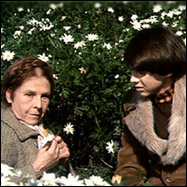
Harold & Maude...& Buddhism

by Seleus Blelis

There are a slew of films with Buddhist themes from The Wizard of Oz, Singin' in the Rain, The Matrix and Groundhog Day. But a couple of years ago before I received my Gohonzon, I saw a little film called Harold & Maude (1971).  Let's just say the rest is history. The film took on a significance with me that can only be summed up in two words- Be Happy.

 
I was studying and asking questions about Nichiren Buddhism at the time and I couldn't get over how Buddhist Maude was. She came into this young man's life for a specific reason, it was no coincidence. Speaking for myself, you see and/or taught that happiness is temporary, fleeting, take it while you can. Suffering is a part of life and happiness is not possible.  Harold's problem and for the majority of people is that we are fundamentally unhappy. As the film unfolds, I couldn't get over how happy Maude was. She displayed an array of human emotions from sadness to joy, but maintained an indestructible spirit. The lessons of life she was teaching wasn't only for Harold but for the audience.


In essence, she was shakabuking us and I recognized this right away. How do you become happy? "Appreciate your life. You are a Buddha. You are the best thing that ever appeared on this whole planet. You are the greatest thing in the whole universe. If you believe that there is nothing you cannot do with your life, then there is nothing you cannot do. To believe that you can do anything is to bring your life into harmony".- (Mr. Sonoda: 2000).

Here are a few examples of Maude's wisdom:

                                                          Source

Free yourself from attachments that cause suffering-   
 "Well, if some people are upset because they feel they have a hold on some things, then I'm merely acting as a gentle reminder - I'm sort of breaking it easy. Here today, gone tomorrow, so don't get attached to things."  

Have a positive attitude-  "Greet the dawn with the Breath of Fire!"

Relish every moment of your life-
"Don't play anything! Dear me. Everyone should be able to make some music. Why, it's life! - Rhythm and harmony - That's the cosmic dance. Come with me."

Experience your life-
 "I like to keep a variety. I'm always looking for the new experience, like this one.
something new each day to find it out. After all, we're given life."

Never give up-
"Reach out! Take a chance! Get hurt maybe. But play as well as you can. (she leads a cheer before the stands) Go team, go! Give me an "L." Give me an "I." Give me a "V." Give me an "E.
LIVE!!!!!"

Embrace your Humanity
"I cry at beauty - a first snow, a rose, a sunset. I cry when a man tortures his brother... when he repents and forgiveness is refused... and when it is granted.  begs forgiveness... when
To cry is to laugh. To laugh is to cry... a uniquely human trait. 
And the main thing in life, my dear Harold, is not to be afraid to be human."


In the Gosho, “Winter Always Turns to Spring”-
"Well, not dying, actually. I'm changing. You know, like from winter to spring.
Of course, it is a big step to take"

(Winter Always Turns into Spring- Nichiren Daishonin wrote the following:
 
Those who believe in the Lotus Sutra are as if in winter, which never fails to turn into spring. Never have I seen or heard of winter turning into autumn. Nor have I ever heard of any believer in the Lotus Sutra who remained a common mortal. A passage from the sutra reads, “Among those who hear of this Law, there is not one who shall not attain Buddhahood.”    (Gosho, p. 832; MW-1, p. 150)
In his explanation, the Daishonin compared the definitive principles of faith with the certainty of the changing of the seasons. Thus, just as winter turns to spring without fail, those who uphold faith in the Lotus Sutra will attain enlightenment without fail, even though they will definitely encounter obstacles.


I will end this post with my favorite scene that sums it all up