Showing posts with label Gosho. Show all posts

Nov 9, 2010

Never Give up on Your Dreams

Linda Johnson’s speech by Mark A. Grasso (2001) 

This is a brief summary of a speech by Linda Johnson. She is an SGI-USA leader in California and presented this speech to the SQl-USA Arts Division on 29-may-2001. In addition to taking responsibility for several thousand SQl-USA members in Southern California, Linda Johnson is also a practicing criminal lawyer. She supervises nine other lawyers and carries her own case load.

In her talk, she shares her insights regarding the Buddhist principle of’esho funi’, ‘the inseparability of living beings and their environment’, and how to put this principle into practice in order to fulfill one’s dreams.


To state her main point; we practice this Buddhism of Nichiren Daishonin in order to fulfill all of our dreams in life. In the process of fulfilling our dreams by practicing Nam-myoho-renge-kyo, we will have the opportunity to encourage others by sharing our own experiences. We might consider our experiences to be ‘living’ Buddhist ‘parables’ that we use to share Nichiren Daishonin’s Buddhism with others.

In this sense, pursuing our dreams by using Nam-myoho-renge-kyo is ‘jigyo’, or ‘practice for ourselves’ and using our experiences to encourage others is ‘keta’, or ‘practice for others’. Using our experiences to encourage others, gives tremendous power to our own prayers and creates even greater joy and satisfaction in our life.

Whereas most of us see a clear separation between ourselves and our environment [social, natural, etc.], the principle of ‘esho funi’ states that, in fact, there is no separation whatsoever. What we do, the actions that we take with our thoughts, words and deeds, is always reflected in our surroundings.

Often when we chant daimoku and make effort for some goal, it seems like we draw opposition from our surroundings. It is normal to take this negative reaction as a ‘sign’ or an indication that we cannot achieve our goal.

However, as she points out, according to ‘esho funi’, our surroundings are the reflection of our ‘true heart’, our true conviction, not the cause of it. And, if our true heart is, “I cannot do it”, our surroundings are equally going to agree.

Using the principle of ‘esho funi’ means that we recognize that our environment is only and always the reflection of our own true life-state. From that perspective, our environment is showing us exactly the parts of our life that cause us to give up, to give up on ourselves.

Supported by this insight, we return to the Gohonzon and our Buddhist faith, practice and study [‘shin, gyo, gaku’] to challenge our own inherent doubt and replace it with true, unshakeable confidence.

Striving for a dream always means encountering our own ‘doubting’ selves. However, challenging our inherent weakness and pursuing our dream is exactly the action that develops true confidence.


Because we are Buddhas, we inherently possess every resource necessary to achieve our dreams. There is no one any better than we are. Neither is there anyone who is any less than we are. And by striving for our own dream using, as Nichiren Daishonin says, “the mighty sword of the Lotus Sutra”, the Gohonzon, we gain the experience to fullfill our dreams and encourage others.

Thoughts concerning this speech by Mark A. Grasso: We validate the power of our prayer whenever we pull obstacles from our environment in precise opposition to our goal. Everyone can have a dream. However, reaching that dream necessarily means developing one’s capacity to embrace that dream with one’s whole heart, with one’s whole confidence.

Developing the capacity to embrace one’s dream wholeheartedly, comes from the struggle against opposition. In other words, in order to have a dream, we must be equally prepared to face the challenge of fulfilling that dream.

This is where, I believe, most of us hesitate. To paraphrase Nichiren Daishonin: “It is only lack of courage that has prevented us from achieving Buddhahood until now.” What is required, is the courage to overcome our own ‘cowardly’ nature and make the determination to indeed, call forth the opposition that will train us in order to fulfill our goal.

At the level of a Buddha, Nichiren Daishonin declared that unless he could call forth the “Three Powerful Enemies” [as described in the Lotus Sutra who persecute the ‘votary of the Lotus Sutra’], then he was not the true ‘votary of the Lotus Sutra’. First and foremost, Nichiren Daishonin based himself upon the standard of actual proof.

One’s powerful prayer, based on ‘Myoho’, will always call forth opposition as well as support and power in order to fulfill one’s dreams. However, our fundamental posture in prayer or ‘ichinen’ [‘determination’] is important. In “The Opening of the Eyes (II)” Gosho, after raising the question about his apparent lack of protection by the ‘heavenly deities’ who promised in the Lotus Sutra to protect the ‘votary of the Lotus Sutra’, 

Nichiren Daishonin declared:
"This I will state: Let the gods forsake me. Let all persecutions assail me. Still I will give my life for the sake of the Law. Here I will make a great vow. Though I may be offered the rulership of Japan if I would only abandon the Lotus Sutra, accept the teachings of the Meditation Sutra, and look forward to rebirth in the Pure Land, though I might be told that my mother and father will have their heads cut off if I do not recite the Nembutsu -- whatever obstacles I might encounter, so long as persons of wisdom do not prove my teachings false, I will never yield! All other troubles are no more to me than dust before the wind. I will be the pillar of Japan. I will be the eyes of Japan. I will be the great ship of Japan. This is my vow, and I will never forsake it!” [The Opening of the Eyes (II), WND, p. 280, written in March 1272 from exile on Sado Island] 

No matter what our dream, the determination to achieve it is in no way different from this.He further stated to Shijo Kingo and his wife and to their infant daughter, Kyo’o: “The mighty sword of the Lotus Sutra [Gohonzon] must be wielded by one courageous in faith. Then one will be as strong as a demon armed with an iron staff.” [Reply to Kyo’o, WND, p. 4121

I believe this expresses a fundamental point of guidance in the Daishonin’s Buddhism for putting faith into practice to fulfill our dreams.

Apr 19, 2010

Change is Chanting Daimoku

"Human beings" at the outset carried great significance. This means all humankind; the Daishonin's teaching can benefit all people without exception. Buddhism is a teaching that exists for all human beings. It is not only for the Japanese or the people of one particular country or ethnic group. Nichiren Daishonin declares that, ultimately, for all people- whether poor or wealthy, famous or unknown, powerful individuals pr ordinary citizens, artists or scientists- apart from chanting Nam myoho renge kyo, there is no true happiness, no true joy or fulfillment in life. That's because when we chant daimoku, our lives become one with the life of the Buddha, enabling us to draw forth the inexhaustible strength to carry out our human revolution and to help others to the same.

Photobucket

Fame, wealth and social status alone do not guarantee happiness. May wealthy individuals suffer terribly within their mansions. Some people may be bound up in vanity that they can find no peace of mind. Many famous people feel miserable the moment they slip from the limelight. Let's say there are two people who work in the same company, perform identical jobs and have equivalent material resources and social standing; yet one feels happy while the other feels nothing but despair. It is not all uncommon to find such disparities arise due to differences in people's inner states, differences in their hearts.

Nor can it be said that the advance of science or economics necessarily brings happiness. In ever case, whether we feel happy or unhappy ultimately depends on US. Without changing our state of life, we can find no true happiness. But when we do change our inner state, our entire world is transformed. The ultimate means for effecting such change is chanting daimoku.

We are born in this world to enjoy life. We are not born to suffer. This is a basic premise of the Lotus Sutra on the nature of human existence. To live happy and at ease in this world means to enjoy our work and family life, to enjoy helping others through Buddhist activities. If we have a truly high state of life, then even when unpleasant things happen we view them as making life all the more interesting, just as a pinch of salt can actually improve the flavor of a sweet dish. We feel true delight in life, whatever happens.

                                            Source

To experience the "joy derived from the Law" means to fully savor the eternally unchanging Mystic Law and the power and wisdom that derive from it.  In contrast to this joy, there is the "joy derived from desires,"- enjoyment that comes from fulfilling desires of various kinds. While is might seem like genuine happiness, such joy is only TEMPORARY and SUPERFICIAL. It does not arise from the depths of our lives and it soon gives way to unhappiness and dissatisfaction.

Faith enables us to receive the eternal joy derived from the Law.  So let us engrave in our hearts this point: We ourselves receive this joy. Because we receive it ourselves, our happiness does not depend on others. No one else can make us happy. Only by our own efforts can we become happy.

Therefore, there is no need to feel envious of others. There is no need to bear a grudge against someone or depend on another person for our happiness. Everything comes down to our state of life. It is within our power to take our lives in any direction we wish. To be dragged around by other people or the environment is not the way of life the Lotus Sutra teaches. True happiness is not feeling happiness one moment and misery the next. Rather, overcoming the tendency to blame our sufferings on others or on the environment enables us to greatly expand our state of life.

Also, at the most fundamental level, faith is for our sake, not for anyone else's. While we of course practice for ourselves and others and to realize kosen-rufu, ultimately we are the prime beneficiaries of all our efforts in faith. Everything is for our growth; everything contributes to the development of our state of life and the establishment of Buddhahood in our lives. When we practice with this determination, all complaints vanish. The world of Buddhahood that had been covered by the dust of complaints begins to shine, and we can freely and fully savor the joy deriving from the Law.

Source: Learning from the Gosho: The Eternal teachings of Nichiren Daishonin


Mar 8, 2010

Good Times, Bad Times

I heard this Edie Brickell song the other day (which I love) but listening to it now...It reminded me of my favorite Gosho...

"Suffer what there is to suffer, enjoy what there is to enjoy. Regard both suffering and joy as facts of life, and continue chanting Nam-myoho-renge-kyo, no matter what happens"

It may be a stretch but she sings about wanting Good Times, Bad times, in being in a relationship and you can't go wrong with Barry White singing. :D


Jan 18, 2010

Breaking Through Our Limitations

Culled from General Lecture by Linda Johnson,
SGI-USA 21.3.98


Nothing is impossible with Nam-myoho-renge-kyo. That is the spirit with which we have to learn to live everyday in order to live our lives to the fullest.
Too often we limit ourselves, we settle too frequently for less than what we want. We all started practicing because we wanted to achieve something beyond what we currently had. We have to reawaken to that fact and re-inspire and remind each other of the power of Nam-myoho-renge-kyo.

In the gosho "On Attaining Buddhahood", Nichiren Daishonin says: If you wish to free yourself, from the sufferings of birth and death you have endured through eternity and attain supreme enlightenment in this lifetime, you must awaken to the mystic truth which has always been within your life. This truth is Myohorenge-kyo (MW,Vol. 1, pg.3)

Nichiren Daishonin says the only difference between Buddha and common mortal is that a common mortal is still deluded. Too often we spend our days denying our potential. We only see our weakness and allow them to frustrate us. We are always looking for answer outside ourselves. But if we're looking outside ourselves, we're looking in the wrong place. We already have the answer. We already possess everything that we need. The solution to our problems is in the wisdom that is already inside of ourselves. We tap it every time we chant Nam-myoho-renge-kyo with the knowledge and the expectations that "I have the answer. I just need to chant to pull out."

It is very important that we start practicing aggressively. Whatever you need each moment of your life, you already have it with Nam-myoho-renge-kyo you can connect to it. You are no longer at the mercy of your environment unless you choose to be.

In the gosho, Reply to Kyo-O, Nichiren Daishonin says: Nam-myoho-renge-kyo is like the roar of a lion. What sickness can therefore be an obstacle? (MW, Vol.l, pg.119) In this gosho, Nichiren Daishonin is not just referring to physical illness. He is talking about any problem, any obstacle. It is no mistake that he chose to refer to the lion, which is known as the king of the jungle. A lion uses the same energy to attack any prey, no matter what its size. Nichiren Daishonin goes on in that same gosho to say: "A sword will be useless in the hands of a coward." (MW,Vol.pg.120)

The Lion King

We limit our happiness every single day. We have conditioned ourselves to limits and we limit ourselves. As soon as things get difficult we decide and we convince ourselves that "reality" is telling us that we cannot have it and we retreat. We change our goals and give in to our limitations.

President Ikeda says: When your determination changes, everything else begins to move in the direction you desire. The moment you resolve to be victorious, every nerve and fiber in your being immediately orient themselves toward your success. On the other hand, if you think, "this is never going to work out," at that instant, every cell in your being will be deflated, giving up the fight. Everything then will move in the direction of failure. I want you to understand the subtle workings of the mind. How you orient your mind, the kind of attitude you have, greatly influence both yourself and your environment.

The Buddhist principle of a single life-moment possessing 3,000 realms completely elucidates the true aspect of life's inner workings. Through the power of strong inner resolve, we can transform ourselves, those around us and the land where we live. Each of us has this tool, this "secret weapon." There is no greater treasure. (World Tribune. July 11, 1997 pg.14)

Many times we've been chanting and give up when things don't move. But with what attitude have we been chanting? We must go for our dreams 100%! Never do anything half-hearted. If in your heart you don't believe it will happen, it will not happen. It matters what you do in front of and away from the Gohonzon. Your attitude always matters.

The solution is always daimoku and if you don’t believe that, then chant to believe it. Chant to have the courage to take action. Chant to pullout of your life what you need and when you need it. The moment you feel weak,fight back. President Ikeda says even if you get knocked down five times, get up six. Always have the spirit to get up. We can change anything in the moment. We can change this moment and tomorrow. We must be courageous; we must challenge those things that we do not believe we can achieve. If we never challenge the impossible, we can never, ever know the full power of Nam-myoho-renge-kyo.

Marilyn Monroe


The only person who can achieve our dreams is ourselves. We have to rely on ourselves to achieve it, to do it. Nothing in life brings greater joy than achieving a goal through your own effort. If you are not a coward who quits, you can achieve anything. President Ikeda has been writing a lot to the youth lately, but I tell you he's talking to all of us. He says youth isn't just age. It is spiritual strength. Youth means not to be resistant to
change, to never settle for mediocrity and to continually seek growth.

Making constant effort over our lifetime is the key to our happiness. Always be on guard: look at yourself and ask: Am I limiting myself? It is human nature to want to take the path of least resistance. But the path of least resistance is the path of little change, little growth and a lifetime of unhappiness and frustration.

Chanting abundant daimoku is the key to everything. It puts our lives in rhythm so that we can accomplish everything we need to do. It is important to enjoy morning and evening gongyo and daimoku. It is a very mystical experience when you put your practice first, which in effect is putting your life first. You'd be amazed how much you will get done and enjoy doing it. Chanting lots of daimoku is the gift we give ourselves; it is the key to enjoy life.

Aren't we worth it?
We have to encourage each other to stop settling for less and really test this practice. It means a lot of hard work. When we challenge ourselves, a lot of inner resistance comes out. It's about what we do to ourselves to sabotage ourselves. In reality, there are those who demonstrate exception to every rule. Why can't you be the exception all the time? You have the power within you to do that. Faith is to believe in yourself. Stop denying
that you are a Buddha. All you have to do is manifest it from within. Chant to believe you can manifest it. With the right attitude, you can go forward wholeheartedly. Our reality changes from moment to moment. Do not give in to one perception and let it totally take control over your life.

We have the ability to be completely happy, totally victorious, regardless of what another person says or does: irrespective of what's going on in our environment. But if we don't take charge, we won't achieve it. Every time you find yourself putting limitations on yourself, use it as an opportunity to prove that what you can achieve with Nam-myoho-renge-kyo.

Our mission is to show the greatness of the law. Nothing is a problem unless we allow it to be. You must use your Buddha nature. Inspire each other to remember from today onward to go for big dreams and big goals. It's time to go for the impossible so that you can really express yourself. It will be the best possible gift you could ever give yourself.

Nov 19, 2009

Karmic Paycheck


Comic by Boxbrown

Nichiren’s Buddhism is a profound teaching and by practicing it we are able to achieve our goals in life, control the manifestations and circumstances in our environment, and acquire the life-condition of Buddhahood, or unshakable happiness. It is important to understand, however, the practical application of this practice in our daily lives. It is incorrect to think that chanting by itself, that is chanting without making serious efforts to bring about our own human revolution, will be effective. To use a well-known metaphor, that is like expecting a paycheck without working. We must make the causes to reach our goals, not simply wait for them to appear. Nichiren teaches us that though we may have experienced frustration in our lives when our efforts seemingly do not produce the desired effect, summoning faith in the power of Nam-myoho-renge-kyo will definitely yield great benefit.

 Source: -->
“On Attaining Buddhahood In This Lifetime”
June 2006 Gosho Study

Nov 14, 2009

Treasures of the Heart


From a presentation by SGI-USA Vice General Director, Mr. Greg Martin:


  • 1. Today I'm excited to talk about my new discoveries concerning Treasures of the Heart.
  • 2. Today I will speak about one point only. There are others in the material, and you may choose one of them, but I want to speak only about Treasures of the Heart.
  • 3. We teach people how to become happy based on the correct practice of Nichiren Daishonin's Buddhism as taught by the SGI, especially President Ikeda. As a presenter I have a responsibility to be accurate. I will strive to do so today.
  • 4. Nichiren Buddhism is not rocket science-if it were it would not be for everyone and thus, not the great vehicle for attaining Buddhahood. Ultimately Buddhism is for all people and thus cannot require a great intellect.
  • 5. When we study Buddhism we are actually studying the true nature of our own lives. This is what Josei Toda realized in prison that became the source for the rebirth of Buddhism in this age. Whatever we are studying we are studying how our life works.
  • 6. Finally, my goal is that each and every member who hears what I say will have a changed prayer that is stronger, clearer and correct-and as a result each person will experience a breakthrough. As a result then study has power.
  • With this as a preamble let's begin.

Treasures of the Heart-what are they?

I began by reading the material thoroughly. I've studied and presented on the three treasures many times. As I read I asked myself what can I learn new? I was struck by question #2 of For Dialogue and Reflection: "What are the ‘treasures of the heart'? Although it may seem a simple question when I referred back to the text I learned that they are important and can be developed through Buddhist practice but could only find them specifically described as ‘the spiritual richness we cultivate within." But what does that mean?


I conducted an Informal Survey of Buddhist friends to determine if perhaps it was clearer to others than if was to me with the following Responses:
  • Human relationships-genuine and natural communication with others; genuine friendships; happiness for others.
  • Enjoying the moment with people, nature and yourself
  • Wonderful memories, victory over weaknesses, joy, appreciation; feeling free to create and explore
  • Living as a disciple
  • A heart of faith
  • Lucky in love.

While everyone was clear that treasures of the heart are important they were less clear about exactly what treasures of the heart are. As a result, one wonders, how can one strive to accumulate something if you don't know what you're looking for?

Like happiness. A core principle of our country is the right to freely pursue one's happiness. However, failing to understand the true nature of happiness, that pursuit will lead only to dissatisfaction and disappointment. Therefore, to have any reasonable expectation of achieving happiness one must understand what it is, what it is not and how to achieve it.

The same is true to treasures of the heart. I, of course, had my own ideas about what they were, but was I correct? Thus, I focused on trying to clarify for myself more precisely what they are, what they are not and how to accumulate treasures of the heart.

Shijo Kingo was faced with threats to his life, family and property. Shijo Kingo was a man of justice, but with a temper as well. This letter is the Daishonin's guidance to him.
  • p. 848: "when the Buddha nature manifests itself from within, it will receive protection from without." SHIJO KINGO, MANIFEST YOUR BUDDHA NATURE IF YOU WANT TO BE PROTECTED.
  • P. 849: "worthy persons (a Buddha) will advocate the five constant virtues." THE FIVE CONSTANT VIRTUES, ALSO CALLED THE FIVE GREAT PRINCIPLES OF HUMANITY, ARE: BENEVOLENCE, RIGHTEOUSNESS, PROPRIETY, WISDOM, AND GOOD FAITH-ARE PRINCIPLES BY WHICH YOU (SHIJO KINGO) SHOULD ABIDE IF YOU WANT PROTECTION. Found in the glossary of the Gosho.
  • P. 852: "The purpose of the appearance in this world of Shakyamuni Buddha, the lord of teachings, lies in his behavior as a human being. The wise may be called human, but the thoughtless are no more than animals." IF YOU BEHAVE WISELY-CONTROL YOUR ANGER, SHIJO KINGO-BASED ON THESE VIRTUES YOU WILL SURVIVE AND THRIVE.

Treasures of the Heart then has to do with behavior based on inner qualities or virtues. These qualities or virtues manifest from within and guide one's thoughts, words and behavior. As a result one receives protection, good fortune and benefit. Good relationships, a fulfilling life-such things are side-effects of manifesting treasures of the heart not treasures of the heart themselves. Everything is determined by how one lives, not by what one has.

Another perspective is that the Daishonin equates treasures of the heart with the virtues of the life state of Buddhahood and, as we know, these can also be seen as the qualities of absolute happiness. The Buddha's three virtues of parent, teacher and sovereign are the qualities we should strive to accumulate.

How do we accumulate these treasures or virtues?

The Gosho says: "Live with honor. Be diligent in the service to your lord, in the service of Buddhism, and in one's concern for other people."

p. 56-7: Noteworthy in this passage is Nichiren's encouragement to Kingo to become outstanding ‘in the service of his lord, in the service of Buddhism, and in his concern for other people.' We can take this as Nichiren also urging us to fully develop our personalities.... The true meaning of actual proof in Nichiren Buddhism lies in developing our character as we develop our faith...The practice of leading people to the correct Buddhist teaching by refuting their erroneous views is the well-known practice of Bodhisattvas of the Earth as expounded by Nichiren"

To be a Bodhisattva of the Earth is to have the same mind as Nichiren-to walk the path of mentor and disciple. Carrying out the practice based on the way of mentor and disciple is the source from which the treasures of the heart flow. Further, since the treasures of the heart constitute the virtues of absolute happiness and Buddhahood, sharing them with others-allowing those treasures and virtues to flow out from us to others-makes room for more treasures to gush forth within. In that sense, treasures of the heart flow through us to others in an unceasing flow.

SGI President Ikeda explains: "The Daishonin's statement, ‘More valuable than treasures in a storehouse are the treasures of the body, and the treasures of the heart are the most valuable of all' sums up a vital philosophy. In the twenty-first century, this will doubtless come to be recognized as a preeminent theory of value. For us, ‘treasures of the heart' means cherishing a vow to work for kosen-rufu (world peace). There is no greater treasure of the heart. " (LB, 11/03, 36)

Why? Because the vow to carry out the Buddha's work activates the state of Buddhahood within-after all, only a Buddha can do the Buddha's work-manifesting the Buddha's virtues within. This triggers the protection of the protective functions and the actualization of good fortune. Thus, the most fundamental treasure from which the other treasures of the heart arise is the vow of kosen-rufu.

In Lectures on the Expedient Means and Life Span Chapters of the Lotus Sutra (pp. 29-32) you will find more about the path of mentor and disciple and the development of one's character. I urge you to read it. Time does not permit much comment here except to say that President Ikeda explains the purpose of the mentor and disciple relationship-of two people sharing the same vow-is the development of people's character. To neither become arrogant and independent nor lacking in self-respect and dependent. Another way then to define treasures of the heart is the ability to sustain self-respect and respect for others at the same time. As President Ikeda writes: "The great mission of Buddhism lies in this-cultivating and developing character."

By accumulating treasures of the heart that arise through our efforts to widely share the Daishonin's teachings with others, we can lead an unsurpassed life of infinite value. Countless millions of tens of millions of people have walked this path and solidified it for those who follow. We have entered an age when the great actual proof we have shown through the power of our faith will be applauded by people throughout the world" (LB, 11/03, 36).

Treasures of the heart according to Buddhist Concepts for Today's Living

The human heart, left to its own devices, tends to lean toward the exclusive pursuit of wants and desires. When, spurred on by this ‘hungry heart,' people focus their energies on obtaining treasures of the storehouse and treasures of the body, they are never satisfied.... Psychological research is finding more and more that people whose primary focus in life is the attainment of ‘extrinsic goals'-externals such a wealth, property, fame and status-tend to be less happy. In general, they are said to experience higher levels of anxiety, suffer more from illness, and have less of a sense of fulfillment....
 

In this light, it is easy to see why the ability to win over ourselves-over our weakness that makes us vulnerable to defeat by our own desires-is the most important treasure we can possess. This is the treasure of the heart. We can define ‘treasures of the heart' as the mental and spiritual capacities to achieve mastery over oneself and to have genuine fulfillment, a brightness of spirit, a warm and attractive personality, self-control, conviction, a sense of justice, courage, empathy and compassion. Or, it may be viewed as an indestructible spiritual state-the state of absolute happiness-that allows a person to surmount even life's most fundamental sufferings. A winner in life is a person who amasses treasures of the heart" (LB, 07/99, 5).

Image Sources: deviantart

Oct 23, 2009

Harold & Maude...& Buddhism

by Seleus Blelis

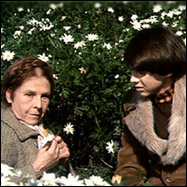
There are a slew of films with Buddhist themes from The Wizard of Oz, Singin' in the Rain, The Matrix and Groundhog Day. But a couple of years ago before I received my Gohonzon, I saw a little film called Harold & Maude (1971).  Let's just say the rest is history. The film took on a significance with me that can only be summed up in two words- Be Happy.

 
I was studying and asking questions about Nichiren Buddhism at the time and I couldn't get over how Buddhist Maude was. She came into this young man's life for a specific reason, it was no coincidence. Speaking for myself, you see and/or taught that happiness is temporary, fleeting, take it while you can. Suffering is a part of life and happiness is not possible.  Harold's problem and for the majority of people is that we are fundamentally unhappy. As the film unfolds, I couldn't get over how happy Maude was. She displayed an array of human emotions from sadness to joy, but maintained an indestructible spirit. The lessons of life she was teaching wasn't only for Harold but for the audience.


In essence, she was shakabuking us and I recognized this right away. How do you become happy? "Appreciate your life. You are a Buddha. You are the best thing that ever appeared on this whole planet. You are the greatest thing in the whole universe. If you believe that there is nothing you cannot do with your life, then there is nothing you cannot do. To believe that you can do anything is to bring your life into harmony".- (Mr. Sonoda: 2000).

Here are a few examples of Maude's wisdom:

                                                          Source

Free yourself from attachments that cause suffering-   
 "Well, if some people are upset because they feel they have a hold on some things, then I'm merely acting as a gentle reminder - I'm sort of breaking it easy. Here today, gone tomorrow, so don't get attached to things."  

Have a positive attitude-  "Greet the dawn with the Breath of Fire!"

Relish every moment of your life-
"Don't play anything! Dear me. Everyone should be able to make some music. Why, it's life! - Rhythm and harmony - That's the cosmic dance. Come with me."

Experience your life-
 "I like to keep a variety. I'm always looking for the new experience, like this one.
something new each day to find it out. After all, we're given life."

Never give up-
"Reach out! Take a chance! Get hurt maybe. But play as well as you can. (she leads a cheer before the stands) Go team, go! Give me an "L." Give me an "I." Give me a "V." Give me an "E.
LIVE!!!!!"

Embrace your Humanity
"I cry at beauty - a first snow, a rose, a sunset. I cry when a man tortures his brother... when he repents and forgiveness is refused... and when it is granted.  begs forgiveness... when
To cry is to laugh. To laugh is to cry... a uniquely human trait. 
And the main thing in life, my dear Harold, is not to be afraid to be human."


In the Gosho, “Winter Always Turns to Spring”-
"Well, not dying, actually. I'm changing. You know, like from winter to spring.
Of course, it is a big step to take"

(Winter Always Turns into Spring- Nichiren Daishonin wrote the following:
 
Those who believe in the Lotus Sutra are as if in winter, which never fails to turn into spring. Never have I seen or heard of winter turning into autumn. Nor have I ever heard of any believer in the Lotus Sutra who remained a common mortal. A passage from the sutra reads, “Among those who hear of this Law, there is not one who shall not attain Buddhahood.”    (Gosho, p. 832; MW-1, p. 150)
In his explanation, the Daishonin compared the definitive principles of faith with the certainty of the changing of the seasons. Thus, just as winter turns to spring without fail, those who uphold faith in the Lotus Sutra will attain enlightenment without fail, even though they will definitely encounter obstacles.


I will end this post with my favorite scene that sums it all up  


Oct 21, 2009